

As parents, you want to know that your investment in college will pay off — not just in a degree, but in real growth, real preparation, and real opportunities for your student.
We asked the parents of a recent UMA graduate to share their honest perspective: What surprised them about UMA? How has their daughter’s education translated to real-world success? And what advice would they give to parents who are navigating this decision right now?
Meet the Family
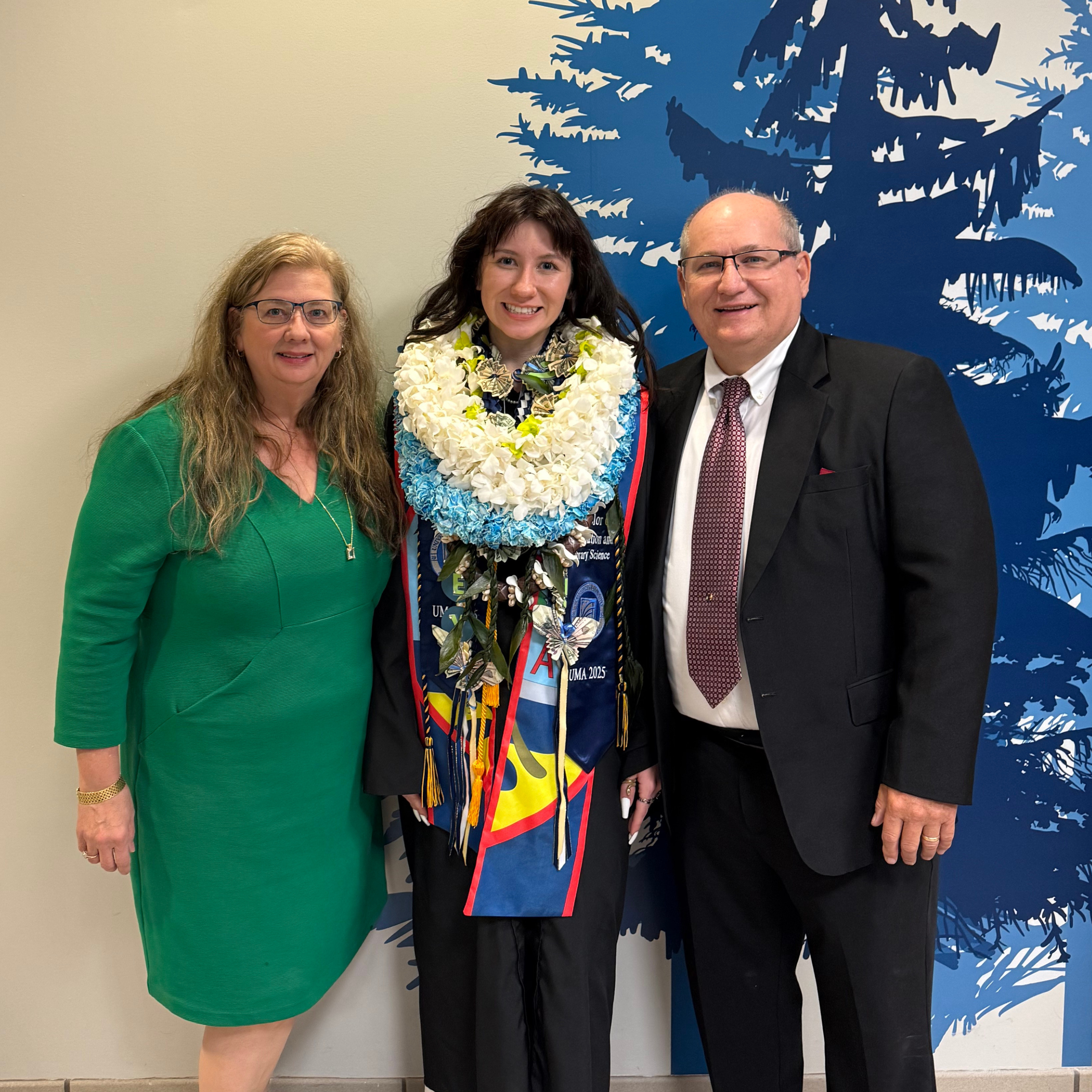
Garvey Blackwell ’25
Bachelor of Science in Information and Library Science
Recipient of the Kathleen Dexter Distinguished Student Award
Currently pursuing her Master’s in Library and Information Science while working as a Library Research Assistant
Parent Q&A
What possibilities has UMA opened for your student that you didn’t anticipate when they first enrolled?
We anticipated an excellent education and friendship for our daughter, Garvey; however, what she received was well beyond the courses. At UMA, Garvey joined a community of students and professors who are passionate about libraries and information. She has worked on grants, archived records for an organization, and conducted usability studies for four libraries. Through her courses and internship, she realized her passion lies in digital curation and archives.
Garvey had a passion for libraries before beginning at UMA. Still, the excitement, dedication, and mentorship of the professors solidified for her that she was in the right college, right program, and on the right path for her educational goals. When visiting UMA, professors for all programs, administrative staff, and students were genuinely interested in Garvey and made her feel welcomed and appreciated. While questions arise as they do for all students, Garvey was able to contact staff at UMA to assist quickly, and resolution was always efficiently accomplished.
How has UMA prepared your student for success in ways that exceeded your expectations?
As parents, we knew that graduate school was a necessity for success in any field Garvey studied. With that in mind, Garvey decided to obtain her bachelor’s in Information and Library Science, which is what led her to UMA. We knew from the very first courses that Garvey took that first semester that she was well prepared from her studies for college, but that UMA courses and professors would challenge her and mentor her to ensure she was successful not just in passing the courses but in truly understanding and being able to apply the coursework.
The expectations from her professors pushed Garvey to apply herself, not just in producing excellent assignments, but also in researching more, studying longer, and asking more questions through discussion boards and direct contact with professors. While she excelled in her grades, we were more impressed by the information she was learning, her excitement for the courses and professors, and her confidence that she was in a college that offered her educational challenges, mentorship, and camaraderie.
Now that she is in graduate school, she is excelling in all her courses. Garvey credits her education at UMA for making graduate school easier, and she is confident in her work assignments due to her UMA education. Additionally, Garvey has been able to reach out to her professors at UMA for support and guidance with her courses in graduate school. UMA consistently demonstrates its commitment to students through education, mentorship, and support. Even after graduation, Garvey remains part of the UMA family, which provides continued support.
What would you tell parents who are hesitant about whether college is “worth it” today?
College is definitely an expensive cost for most families; however, depending on your student’s career path, in many cases, college is a necessity. In today’s world economy, a bachelor’s and probably a master’s degree would be necessary for many careers. The good news is that there are numerous ways to pay for college, along with many opportunities for scholarships. But even if college seems out of reach financially, parents should consult with the financial office at the colleges on your student’s list, assist with finding external scholarships, and then look at what your student and your family can afford.
Taking college courses part-time while working may be a longer path to a degree, but it is still a viable path to achieving it. We found that many colleges were willing to work with us to afford college for our daughter.
What’s the biggest way you’ve seen UMA impact your student’s confidence or career readiness?
Garvey was already a confident young adult; however, UMA provided opportunities, courses, and excellent professors that not only built her confidence based on her studies and career readiness but also mentored her by advising, supporting, and encouraging her to strive for more. The notes provided by her professors for the coursework not only guided her to more information but also encouraged her to look beyond the assignments. This approach helped her develop through a thorough analysis of the assignments, praising and correcting as necessary.
Garvey works part-time in a library, where she has made a significant impact on accessibility and streamlined processes. She is a valued employee who contributes well beyond her position requirements. She has successfully applied what she learned at UMA and built upon that knowledge to enhance her work performance and provide better service to patrons.
If you could give one word of advice to parents whose child is considering UMA, what would it be – and why?
RESEARCH.
Research is a necessity to find the college that will fit your student. We, with our daughter, researched colleges for almost a year before application deadlines. We identified numerous similarities and differences in the courses offered at each of the colleges on her list. Several colleges reached out to Garvey to recruit her, and we visited many of them, but we kept coming back to UMA.
The research is essential to understand how your student will find the college fully. As part of our research, Garvey often called the college’s admissions office to ask a question, which proved interesting in how the college interacted with students. We found some colleges never answered the question or referred her to the website, some never responded to the voice message, and others responded with disinterest in her at all. Tours of campuses and interacting with administration and students often provided insight into what to expect when your student is attending. The best research is to speak with a professor and a student in the same major as your student. We found this to be very helpful in making choices to narrow her list of colleges.
I can tell you that when Garvey was able to FaceTime with not one but two professors and a former student at UMA, we were sold on how she would be treated. They were enthusiastic and even answered my many questions as a parent. UMA was the only college that offered a face-to-face experience without requiring a flight to Maine, which basically sealed our daughter’s decision because she felt heard, accepted, and genuinely interested in her as both a student and a person.
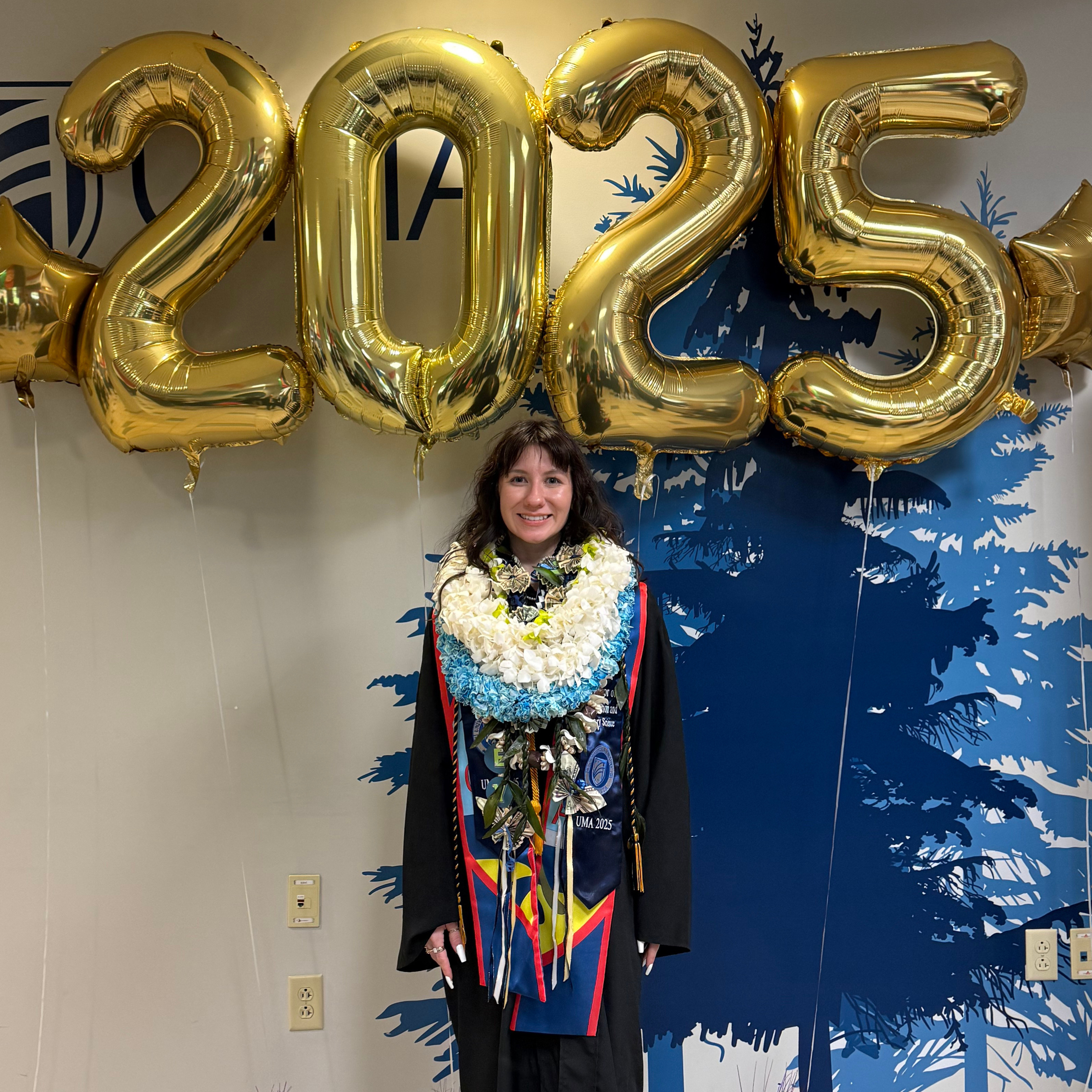
Garvey studied online and never set foot on campus until graduation day. But she found professors who mentored her, challenged her, and genuinely cared about her success. She built skills that other professionals are genuinely surprised by. And she found a place where she belonged — a place she still carries with her, even as she’s moved on to graduate school and her career.
Because that’s the thing about finding your place: when your student grows there, when they’re supported there, when they belong there — it stays with them. Even after they’ve moved on to whatever comes next.