
Jewish American Heritage Month is an opportunity to celebrate the rich history, culture, and contributions of Jewish Americans to our shared story nationally, in Maine, and at the University of Maine at Augusta. Established in 2006 through bipartisan congressional resolutions and a presidential proclamation, the observance builds on more than 350 years of Jewish life in the United States and recognizes how deeply Jewish Americans have shaped the nation’s social, cultural, intellectual, and political life.
Across generations, Jewish Americans have contributed as jurists, activists, artists, educators, public servants, and innovators. Figures such as Supreme Court Justice Louis Brandeis, labor leader Rose Schneiderman, and composer Leonard Bernstein helped shape American law, labor history, and the arts. Contemporary leaders including Rabbi Sandra Lawson, journalist Ezra Klein, comedian Sarah Silverman, and U.S. Senator Bernie Sanders reflect the continuing breadth and diversity of Jewish American life and leadership.
In Maine, Jewish Americans have been part of the state’s history for roughly two centuries and have made lasting contributions to education, the arts, public service, philanthropy, and civic life. Many Jewish Mainers have left especially notable legacies. Hiram Abrams, born in Portland, became an early movie mogul and one of the first presidents of Paramount Pictures, and later served as managing director of United Artists. Judith Magyar Isaacson, a Holocaust survivor, became a respected educator and dean at Bates College and shared her experience with generations of students. Abraham Rudman was the first Jewish justice on the Maine Supreme Judicial Court. Louise Nevelson, who grew up in Rockland, became one of the most influential American sculptors of the twentieth century. Harold Alfond made transformative contributions to Maine schools, colleges, health care, and community institutions through his philanthropy.
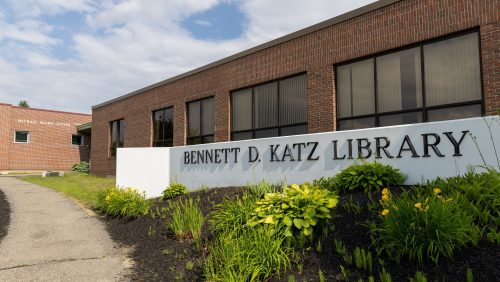
UMA also has meaningful connections to Jewish life and leadership in Maine. Bennett D. Katz, a World War II veteran, longtime state legislator, and advocate for public higher education, played an important role in the founding of UMA. He later served on the Board of Trustees, received an Honorary Doctorate, and was honored when the university library was named the Bennett D. Katz Library.
Professor Bob Katz, a longtime member of the UMA art faculty, has also enriched the university through his teaching, creative work, and engagement with Jewish thought and culture. He has served on the Board of Directors of the Holocaust and Human Rights Center of Maine and created Were the House Still Standing, the center’s signature multimedia installation preserving the voices of Holocaust survivors and liberators who made their lives in Maine.
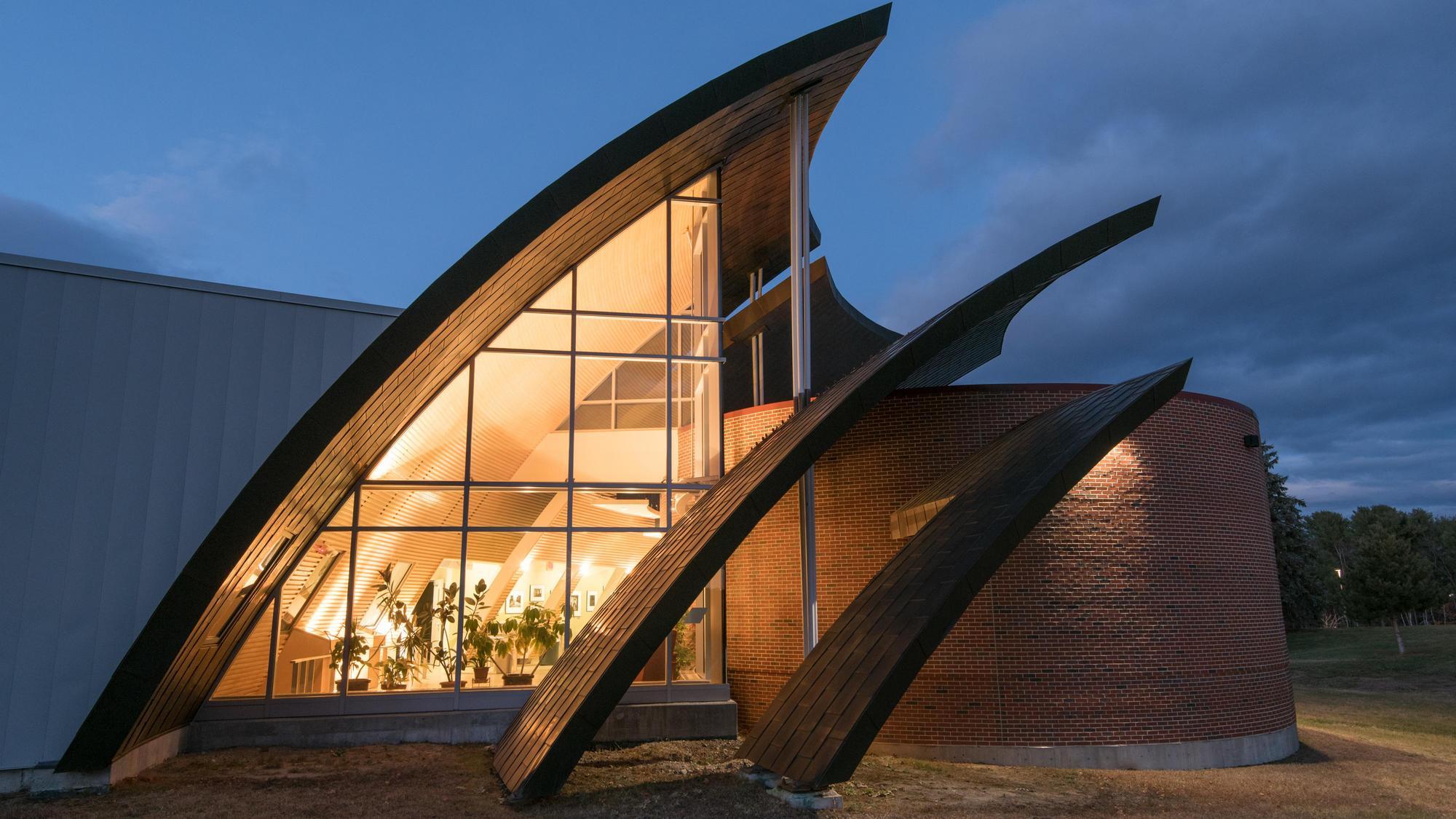
The Holocaust and Human Rights Center of Maine, housed in the Michael Klahr Center on UMA’s Augusta campus, is a vital part of this story. Named for Michael Klahr, a child Holocaust survivor who later made his home in Maine, the center preserves survivor testimonies and offers exhibits and programs that connect the history of the Holocaust with contemporary questions of human rights, justice, and civic responsibility. Its thoughtfully designed space, which includes a theater, classroom, and gallery areas, provides a gathering place for students, educators, and community members to learn, reflect, and engage in dialogue together.
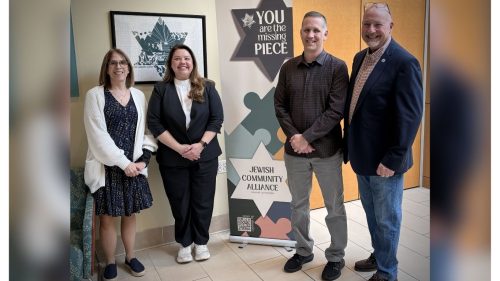
UMA’s partnership with the Holocaust and Human Rights Center of Maine reflects an ongoing commitment to education, remembrance, and civic responsibility. Through that partnership, UMA, the HHRC, and the Jewish Community Alliance of Southern Maine presented seminars including “What You Do Matters: Lessons from the Holocaust” and “Defining Moments in Policing: Ethical Decision Making during the Holocaust,” led by Dr. Todd Larson, Chief Noel March, and Erica Nadelhaft. These programs brought law enforcement, corrections, and community leaders together to explore ethics, accountability, and the importance of individual choices.
Jewish American Heritage Month invites the entire UMA community to learn more about Jewish experiences in all their diversity and to recognize the many ways Jewish Americans have helped shape our communities and our country. It is also a reminder that learning about one another’s histories strengthens a campus culture grounded in respect, understanding, and belonging. Throughout May, members of the UMA community are encouraged to explore programs, events, and resources that highlight Jewish history and culture, whether by attending a lecture, visiting the Holocaust and Human Rights Center, engaging with Jewish literature and art, or simply taking time to learn something new. As we observe Jewish American Heritage Month, UMA celebrates the enduring contributions of Jewish Americans and reaffirms its commitment to a community where every person is valued and every history has a place.
*A note about the architectural elements of the Klahr Center
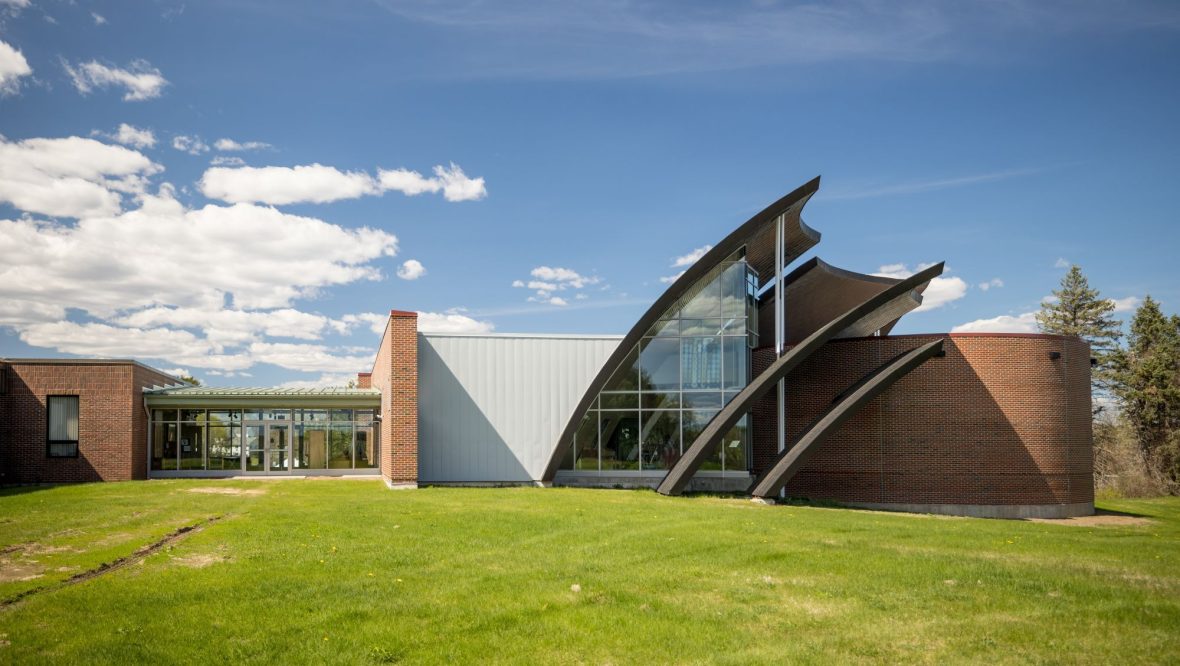
The design of the Michael Klahr Center is both beautiful and symbolic. The combination of brick, wood, and glass balances a sense of strength with a reminder of vulnerability, prompting reflection on how fragile human rights can be and how intentionally they must be protected. Its sweeping, curved exterior forms suggest shelter, resilience, and renewal after trauma. The tall glass façade opening to the landscape invites light in and can be read as a metaphor for transparency and remembrance.
The center is named for Michael Klahr, who survived the Holocaust as a Jewish child in wartime Europe and later made his home in Maine. His story, along with those of other survivors who settled in the state, lies at the heart of the center’s mission to educate about the Holocaust, confront antisemitism and other forms of hatred, and promote human rights and ethical responsibility.
Check out local events commemorating Jewish American Heritage Month on UMA’s Heritage Month Calendar as well as learning resources concerning the significance of Jewish American Heritage Month in Maine and beyond. You can keep up with more content like this by subscribing to the calendar and submitting events and resources to promote inclusion and belonging in our community.