
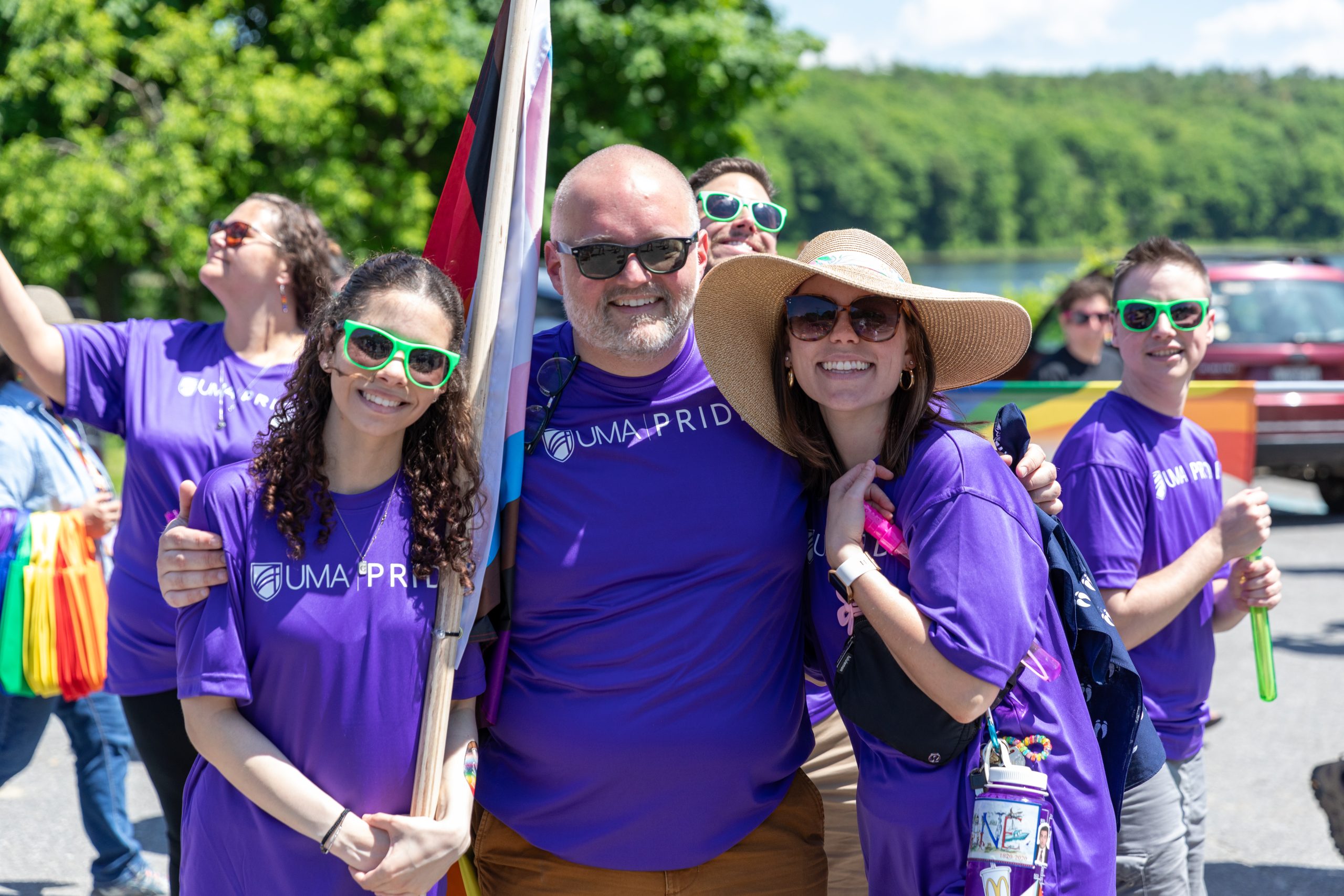
Each June, communities across the nation observe Pride Month to recognize the history, contributions, and resilience of LGBTQIA+ individuals. At the University of Maine at Augusta, this month offers a meaningful opportunity to support our diverse student body, faculty, staff, and alumni.
To understand the scope of this celebration, it helps to recognize what the acronym itself represents. LGBTQIA+ stands for Lesbian, Gay, Bisexual, Transgender, Queer or Questioning, Intersex, and Asexual. The plus sign signifies all other sexual orientations and gender identities that form this diverse community.
The Roots of the Movement
The roots of Pride Month reach back to the Stonewall Uprising in New York City in June 1969. During an era when same-sex relationships and diverse gender expressions were criminalized across the country, a police raid on the Stonewall Inn sparked days of spontaneous protests. Led largely by transgender women of color, drag queens, and gay youth (including prominent activists like Marsha P. Johnson and Sylvia Rivera), these protests catalyzed the modern gay liberation movement.
One year later, on June 28, 1970, the first Pride march took place in New York. This event transformed a single act of resistance into a national tradition of visibility, educational events, and community gatherings. Federal recognition followed in 1999 when the month of June was officially designated to honor the community, an acknowledgment that has been expanded by successive administrations over the last 27 years.
Symbols of Visibility
Visual symbols have always played a central role in bringing visibility to the community. The traditional rainbow flag, designed by veteran and artist Gilbert Baker in 1978, originally featured distinct colors to symbolize elements of human experience, including life, healing, sunlight, nature, serenity, and spirit.
In 2018, designer Daniel Quasar introduced the Progress Pride Flag to place a specific emphasis on intersectionality. This newer design adds a five-colored chevron (a triangle) pointing from the left edge toward the center. The light blue, pink, and white stripes represent the transgender community, while the brown and black stripes represent LGBTQIA+ people of color. The black stripe also honors those lost to or living with HIV/AIDS. The arrow shape points forward to signify the ongoing movement toward community inclusion.
Spotlight on Alumni Leadership
The spirit of advocacy and community care is carried forward by dedicated individuals across our state, including members of our own UMA family. One notable example is UMA alumnus Justin Chenette.
A 2021 graduate of UMA’s Post-Baccalaureate Public Administration program, he made history in 2012 at age 21 by becoming the youngest openly gay legislator elected in the United States and the youngest lawmaker in Maine. He went on to serve eight years in the Maine Legislature, including two terms in the State Senate, where he was the only openly LGBTQ+ senator at the time, before being elected the first openly gay York County Commissioner in 2022. UMA awarded Chenette its 2025 Distinguished Alumni Award, recognizing his successful ethics reform legislation, his nonprofit scholarship foundation, his efforts to pass York County’s first-ever Pride Proclamation, and his current role as Chief Communications Officer at Sweetser, one of Maine’s largest mental health organizations. Chenette’s leadership has earned him spots on two 40 Under 40 lists, receiving national recognition from The Advocate and state-level honors from Mainebiz.
Community Care in Maine
Maine has a distinctive history of grassroots advocacy and community connection. Rather than a sudden shift, the state’s path has been shaped by decades of local organizing, legal updates, and cultural growth. Notably, in 2012, Maine became one of the first states to legalize marriage equality through a popular referendum, demonstrating a widespread, neighbor-to-neighbor effort to shift public perception.
Today, that spirit of community care lives on through local organizations and advocates doing vital work across the state. Groups like OUT Maine focus on supporting rural queer youth by building safe spaces, providing school resources, and offering educational opportunities. Meanwhile, historical foundations like the Frannie Peabody Center continue to provide essential care, case management, and housing assistance for individuals living with HIV/AIDS. These efforts highlight a steady, quiet commitment to supporting neighbors and fostering connection in every corner of the state.
Opportunities to Connect
This year, UMA welcomed the Seen and “Herd” Club (SaH), a student organization that creates a safe, welcoming space for LGBTQIA+ students and allies to connect and support one another. SaH reflects UMA’s commitment to belonging by offering inclusive access, both in-person and via Zoom meetings, for the entire UMA community.
The club will be attending Hallowell Pride on Saturday, June 6 and plan to march in the parade.
The Hallowell Pride Parade and Festival is on Saturday, June 6. This year’s theme is “Freedom.” The full day’s schedule includes a festival from 12 p.m. to 4 p.m. at Granite City Park and McAllister Real Estate. Festivalgoers can support local vendors, community activities, and celebration throughout the afternoon in the heart of Hallowell.
Additionally, the annual Bangor Pride Festival and Parade will take place on Saturday, June 27. This year, the festival features a new location at the Bangor Waterfront. Attendees will have the opportunity to explore local vendor markets, enjoy live performances, and support the local community right by the river.
Check out local events commemorating Pride Month on UMA’s Heritage Month Calendar as well as learning resources concerning the significance of Pride Month in Maine and beyond. You can keep up with more content like this by subscribing to the calendar and submitting events and resources to help promote inclusion and belonging in our community.