

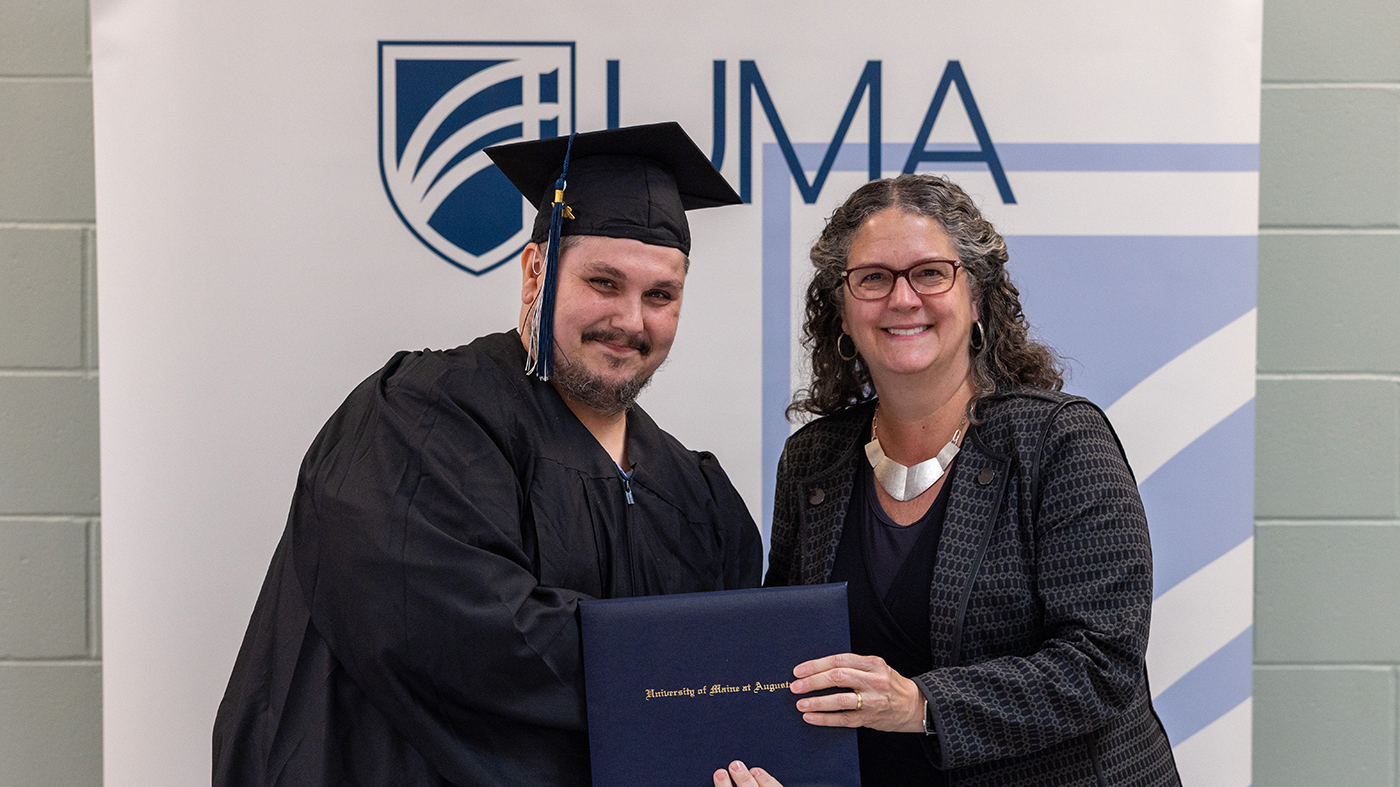
Each April, Second Chance Month invites communities across the country to recognize the challenges justice-impacted individuals face as they rebuild their lives after imprisonment and the opportunities that can help them succeed.
Across the United States, nearly 2 million people are incarcerated in state and federal prisons, and an estimated 5 million formerly incarcerated individuals are working to rebuild their lives in their communities. Many encounter barriers to housing, employment, mental health care and substance use support while also navigating the lasting stigma and trauma of having done time. These challenges contribute to high rates of recidivism within the first few years after release.
Education has proven to be one of the most effective ways to change that trajectory. Research shows that access to college programs while incarcerated can significantly reduce recidivism while improving long-term employment opportunities and community stability.
At the University of Maine at Augusta, the Prison Education Partnership helps create those opportunities. Founded in 2006, the program has become a national leader in higher education in prison through a strong collaboration with the Maine Department of Corrections and the dedication of UMA faculty and staff.
Through PEP, incarcerated and formerly incarcerated students take college courses, earn degrees and build skills that prepare them for life beyond incarceration. The program connects students in Maine correctional facilities with UMA instructors and academic support, creating pathways to opportunity that continue long after release.
For many students, the classroom becomes a place where new possibilities begin to take shape.
“Education is the most effective way not only to break the cycle of incarceration, but also to restore the dignity and humanity of the students we serve,” said UMA Director of the Prison Education Program Daniel McGloin. “By equipping our students with the tools to rewrite their narratives, they are proving every day that their past does not have to define their future. Their success shows that when determination is paired with access to a college degree, it can change the trajectory of a person’s life.”
According to Commissioner of the Maine Department of Corrections Randall Liberty, while Maine’s overall return-to-custody rate is approximately 23 percent, the rate for individuals who earn a UMA degree while incarcerated drops to a staggering 0.05 percent.
Graduates of the program are building careers, supporting their families and contributing to their communities across Maine. Their experiences also enrich the academic community at UMA, bringing new perspectives, resilience and determination to the classroom.
Second Chance Month offers a moment to reflect on the role education can play in strengthening communities and expanding opportunity. Through the Prison Education Partnership, UMA continues to support students determined to build new paths forward and to demonstrate the power of education to transform lives.
Check out local events commemorating Second Chance Month on UMA’s Heritage Month Calendar as well as learning resources concerning the significance of Second Chance Month in Maine and beyond. You can keep up with more content like this by subscribing to the calendar and submitting events and resources to promote inclusion and belonging in our community.