

2025-26 Academic Theme: Civil Rights
The Annual Academic Theme: An Introduction
Since its inception in 1994, the University of Maine at Augusta theme has brought our communities together for numerous activities and programs. Beginning in 2006, an annual colloquium of faculty members has chosen the theme and a corresponding reading to share with other faculty, students, staff, and the larger community. We feature discussions in and outside of our classes and organize events in order to promote larger conversations about the theme. These events have provided a platform for multiple voices to be heard on such significant topics as health and social justice, immigration, and bioethics.
The UMA Colloquium is pleased to announce that the 2025-26 Academic Theme is Civil Rights.
Civil rights is a strong academic theme because it intersects with multiple disciplines, including history, sociology, political science, American studies, communication, and ethics. Furthermore, civil rights harkens on who has a voice in the broader academy, thus influencing all disciplines. Furthermore, in celebrating the 60th anniversary of UMA, the Civil Rights Movement has a distinct intersection with the historical moment. The Civil Rights Act would be signed in 1964 with the Voting Rights Act to follow in 1965. These were integral parts of President Lyndon B. Johnson’s Great Society.
The Civil Rights Movement is a historically significant social movement that has shaped societies worldwide, influencing laws, policies, and cultural attitudes toward equality and justice. Through examining civil rights, we gain a richer understanding of legal frameworks, landmark court cases, and ongoing policy debates in our modern world. Many current events ranging from voting rights to criminal justice reform to LGBTQ+ rights stem from struggles for civil rights during the 1960s. This keeps a historical movement as a timely subject, evolving in many ways daily. As a theme for the entire university, civil rights speaks to the true interdisciplinary nature of knowledge and problem solving. Civil rights discussions fundamentally link to legal frameworks, economic disparities, social movements, and philosophical debates on human rights. Civil rights studies can and do incorporate literature, philosophy, geography, economics, data science, and art, providing a holistic academic perspective.
Civil rights also speaks to many of our general education themes, including ethics, cultural diversity, and critical thinking. To discuss civil rights encourages discussions about morality, equality, and human dignity, fostering critical thinking with respect to justice in our society. The study of civil rights demands us to include the experiences of marginalized groups, offering insight into different narratives, voices, and historical struggles. As civil rights are cross-cutting throughout the world, studying and conversing about civil rights allows for comparative studies between different countries and cultures. The study of civil rights challenges us to analyze systemic issues, question the norms of our society, and propose solutions with equity in mind. Studying civil rights can inspire activism and engagement, equipping our students with knowledge to make the most of their education by driving societal change.
The Colloquium Committee looks forward to working with the faculty, staff, and students, for a productive academic theme for the year.
The Academic Theme is addressed at Convocation in the fall and then through the spring INT/HON seminar, culminating at the UMA Student Research Conference in April.
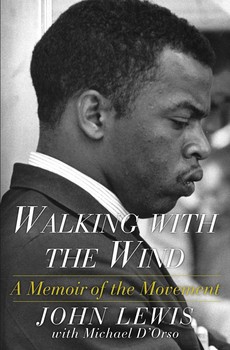
Another component of this year’s academic theme is the adoption of a single theme-related book by a number of classes across the curriculum: Walking with the Wind: A memoir of the Movement by John Lewis.
Thanks to all the faculty colloquium participants this year:
Matt Dube (co-chair), Lorien Lake-Corral (co-chair)
Leigh Alley, Phillip Buckley, Cindy Dean, Greg Fahy, Les French, Vickie Ireland, Anne Jordan, Michelle Lisi, Ruth Lyons, Donna Maher, Sharon Sawyer, Tim Surrette, & Rebecca White