
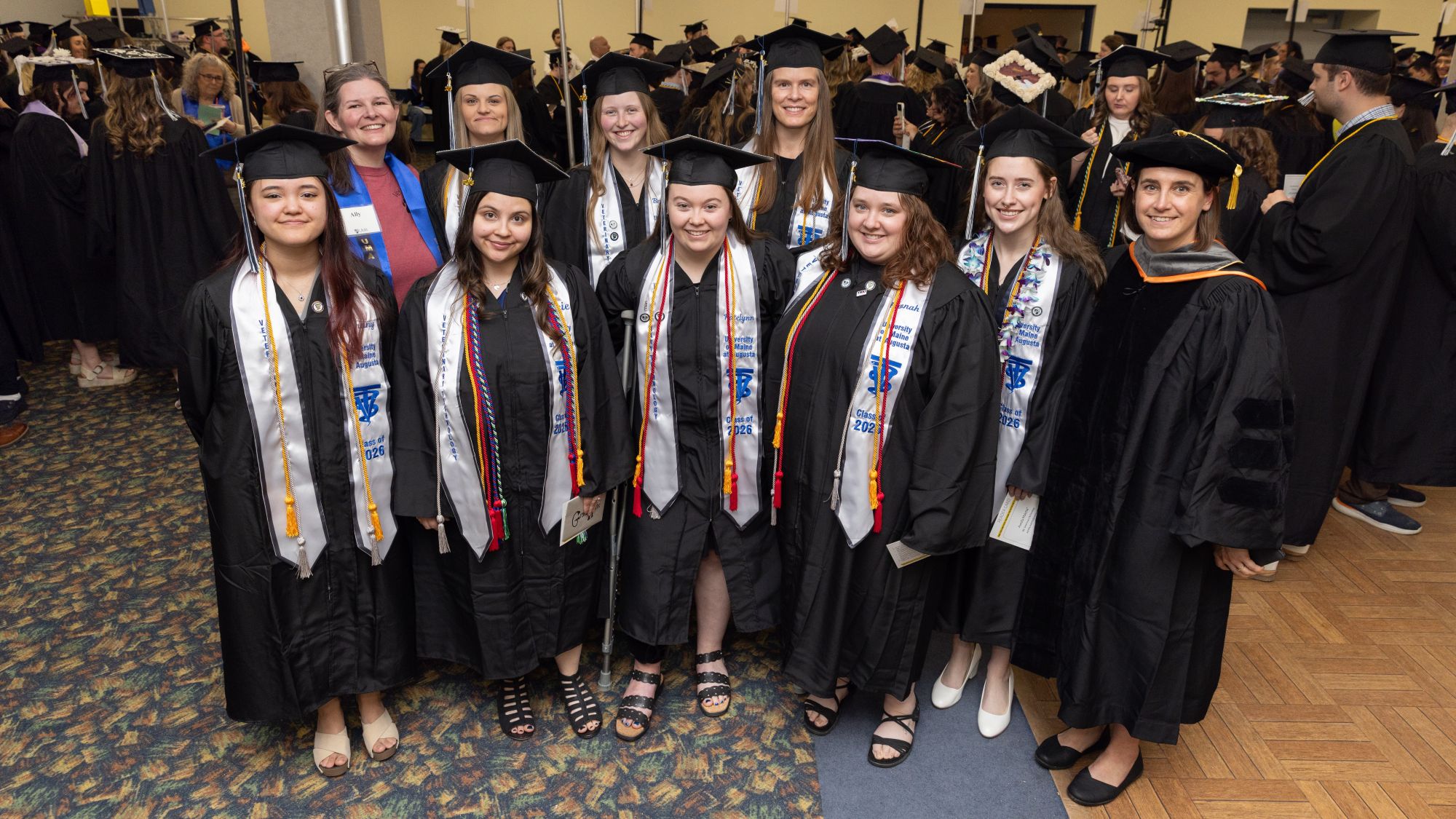
Every student in the University of Maine at Augusta’s 2026 Bachelor of Science in Veterinary Technology graduating class passed the Veterinary Technician National Examination (VTNE) on their first attempt, resulting in a 100% first-time pass rate.
First-time VTNE pass rates typically range from about 67% to 70%, making UMA’s perfect pass rate a notable achievement, well above the national average.
UMA offers both an Associate of Science and a Bachelor of Science in Veterinary Technology, and is the only institution in Maine to offer the B.S. degree in the field. The bachelor’s pathway prepares graduates for careers in veterinary practice, as Licensed Veterinary Technicians or veterinarians, biomedical research, and further education, with opportunities to tailor their studies through a self-directed concentration.
Based on UMA’s Bangor Campus, students learn in a modern teaching facility that includes a surgical suite, surgical preparation and treatment areas, modern laboratory facilities, separate feline and canine boarding rooms, and a digital radiology suite. A classroom and a large student area were renovated in 2023.
In addition to a variety of classes, ranging from Introduction to Veterinary Medicine to Surgical Nursing and Anesthesiology, students also complete two seven-week externships, one in a veterinary practice and another of their choosing which could be a research lab, wildlife rescue, large animal practice, or other speciality discipline. These experiences provide opportunities to apply classroom learning in professional settings, build relationships within the field, and prepare for a smooth transition into careers or further study.
“Veterinary technology is a profession that asks you to combine science with compassion every day,” said veterinarian Jennifer Freese, professor of veterinary technology at UMA. “Our students graduate with the technical skills to care for animal patients, the critical thinking to support veterinarians, and the communication skills to work thoughtfully with clients and their animals.”
In veterinary practices, technicians are essential members of the animal healthcare team, working alongside veterinarians to provide patient care, perform laboratory testing, assist with surgery, administer anesthesia, and educate pet owners. As veterinary practices across Maine continue to seek qualified professionals, graduates who are ready to step into these roles help expand access to veterinary care for animals and the people who depend on them.
Seven of eight graduates have accepted positions in veterinary medicine, while one is continuing their education. Skilled veterinary technicians are in demand across Maine, and this graduating class enters the profession prepared to care for animals, support veterinary teams, and serve communities throughout the state.