

As part of its continuing commitment to intellectual community, the University of Maine at Augusta Research Colloquium (UMARC) series is a venue for UMA faculty, staff, and sponsored students to present completed scholarly works to their peers. The series provides a forum for the presentation of all UMA research (as defined by the Faculty Senate in 2010) including scientific investigations, innovations in education, creative works, and theoretical considerations. Priority is given to those who have not already presented at the Research Colloquium.
The Research Colloquium series takes place during the noon hour using technology to connect UMA’s multiple campuses and Centers. The time reflects our commitment to inclusion, a traditional lunch hour for staff and the time between morning and afternoon classes for faculty and students. Ensuing discussion promotes collaboration through the exchange of ideas and the development of relationships across colleges, programs, departments and disciplines.
2025-2026 Schedule
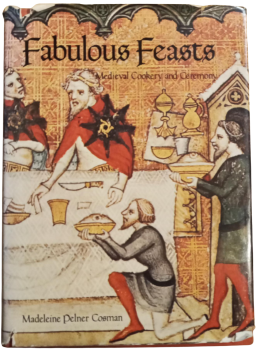
Medieval Cooking in Modern Kitchens
Thursday, April 16, 2026 12:00 PM to 1:00 PM on Zoom™
In this exploration of medievalism studies—the field dedicated to the reception and reinvention of the Middle Ages—Dr. Kellerman’s presentation examines how a collection of medieval cookbooks, or more accurately, modern adaptations of medieval recipes, were culturally situated within mid-1970s American food culture. These texts raise essential questions regarding authenticity and the modern reception of history, specifically addressing how and why we interpret the Middle Ages through our own contemporary filters.
Rather than focusing on primary historical artifacts, medievalism studies investigates the idea of the Middle Ages as mediated by later eras. Medievalism scholars study Monty Python and the Holy Grail and Game of Thrones to organizations such as the Society for Creative Anachronism, which seeks to recreate medieval practices. Ultimately, medievalism studies strives to determine what earlier periods signify for our own time, uncovering how we “read” the Middle Ages on our terms rather than its own.
The Ecology of Emerging Adult Development: A Study of Fosen Folkehøgskole
Thursday, March 26, 2026 12:00 PM to 1:00 PM on Zoom™
This presentation investigates the developmental impact of the Norwegian Folk High School (FHS) system, using Fosen Folkehøgskole as a primary case study for understanding the “ecology” of emerging adulthood. Grounded in the theoretical frameworks of Jeffrey Arnett’s emerging adulthood, Uri Bronfenbrenner’s ecology of human development, and N.F.S. Grundtvig’s “Living Curriculum,” the study examines how structured gap years facilitate personal growth and social formation (dannelse). The research employed a postmodern ethnographic approach, featuring a two-week immersive study at Fosen-Rissa, Norway, which included eight multinational interviews and participant observation in traditional crafts (håndverk) and self-sufficiency (sjølberging).
The findings highlight several core themes: a necessary break from “school fatigue” and competitive academic pressures; the fostering of social intelligence through communal living (fellesskap); and the development of self-awareness through practical, results-oriented learning. Students frequently described the FHS environment as a transformative “thinking pause” that encourages independence and personal responsibility through a flattened teacher-student hierarchy. Furthermore, the study identifies the school as a sanctuary for identity formation, particularly for students navigating life transitions or recovering from previous crises. The presentation concludes by discussing the potential translation of these developmental values to the United States education system, advocating for a shift toward non-academic value and the promotion of holistic human development over competition.
Sara Flowers
Principal Investigator & Director of the Adult Transitions, Learning, and Success (ATLaS) Project

Playful Practice: Electrifying My Musical Instrument
Wednesday, February 4, 2026 12:00 PM to 1:00 PM
Online and in the Farber Forum Jewett Hall Augusta
This presentation explores the evolving role of technology to electrify typically acoustical instruments through the integration of pickups, digital audio workstations (DAWs), effects processing, and live looping. The presentation offers a performance-rich overview of how electronics can enhance the sonic possibilities of musical instruments, often performing examples on the bassoon. Topics include choosing and positioning pickups or microphones, navigating amplification options, and using DAWs such as Garage Band for live effects and looping. Attendees will hear real-time demonstrations that illustrate how reverb, delay, distortion, and harmonizers can transform the instrument’s voice. Special attention is given to looping as a solo performance and compositional tool, highlighting layering techniques and methods for building dynamic, evolving textures.
The presentation also addresses practical performance practice techniques: exercises for loop timing and phrasing, intonation control with effects, and managing transitions between acoustic and processed passages. Through discussion and performance, this session aims to demystify the technology and empower musicians to confidently explore electronics into their creative work. Whether you’re a seasoned performer or a curious music-admirer, this presentation offers a comprehensive and inspiring look at the integration of music and electronics.
Simulating the Performance of TEMPO-Oxidized Nanocellulose in the Filtration of Drinking Water
Wednesday, April 30, 2025 12:00 PM – 1:00 PM on Zoom™ & in person at 284 Jewett Hall Augusta Campus
When the wood of the forest meets the methodologies of nanoengineering, nanocellulose-based materials with unique properties are created. Thousands of product designs have been generated to this effect within areas such as biomedicine and food packaging. All this progress leaves us still with the crucial question – what can be done to better assist the nanocellulose design of the future? The answer is to investigate the atomic scale behavior of wood fibers through Molecular Dynamics simulations in order to paint a detailed picture of how these fibers behave during operation. As drinking water quality is of great concern, the specific application of TEMPO-oxidized nanocellulose to the filtration of lead ion contamination is explored in this presentation. Simulations depict lead ions directly competing with calcium ions to be filtered out by the nanocellulose. Beyond this visualization of competitive adsorption, it will be shown that, in general, the performance of nanocellulose-based filters is a complex result of both fiber morphology and various metal-oxygen interactions.


John Dewey’s Aristotelian Account of Habit
Thursday, April 3, 2025 12:00 PM – 1:00 PM on Zoom™
This presentation is based on my recent chapter in John Dewey’s Human Nature and Conduct: A Centennial Handbook. The chapter argues that Dewey’s re-description of the nature of human habits as the basis for experience and for action is a largely Aristotelian endeavor. Human habits are not simply actions on repeat, but that they form our experience, our perceptions, our ways of thinking and acting. As a result, education is largely a process of conscious habit building. I will connect this discussion of habit to Aristotle’s distinction between potential and activity, his account of human excellence, and practical reason. We will also explore Dewey’s own account of the Reflex-Arc Concept in Psychology and compare Aristotle’s and Dewey’s account of the good for human beings–happiness and growth respectively.
St. Patrick’s Celebrations meet DEI
Wednesday, March 5, 2025 12:00 PM – 1:00 PM Zoom™ & In person at 135 Eastport Hall Bangor Campus
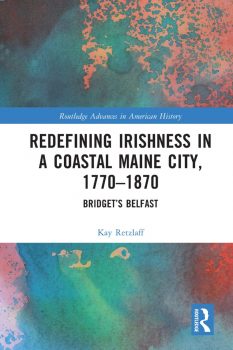
From a modest religious celebration of the fabled Christianizer of Ireland, American celebrations of St. Patrick have devolved into displays of every anti-Irish stereotype available in eighteenth- and nineteenth-century America. In some instances, the perpetrators were Irish. This phenomenon is called Esoteric-Exoteric by folklorists. In other words, the butts of the anti-Irish jokes, took those jokes, turned them around, and used them to bond as an ethnicity—Irish. The Irish became a group surrounded by Anglo Americans, outsiders who even made fun of the way the Irish spoke English. Today, the question remains: are you an insider or an outsider and what is the intent of your joke?

James Cook
Associate Professor of Sociology
Identity in Online Social Context: Mapping Community Connections Surrounding R/Bisexuality on Reddit
Thursday, November 14, 2024 12:00 PM – 1:00 PM Zoom™ & In person at 190 Jewett
No human community, online or offline, exists entirely in isolation. Instead, communities are connected to other communities in a number of ways, including shared membership, interpersonal connection, information flow, and shared physical or cultural space. “Dual” social network models have the potential to trace multiple modes of connection in an online environment, mapping the sociocultural localities within which communities move. In this study, I focus on the context surrounding the liminal identity of bisexuality in the online environment of the social media platform Reddit and the “subreddit” community r/bisexual. Adopting an ego-network method centering the “subreddit” community, r/bisexual, I identified 20 additional subreddits to which its users linked from that community in one month’s time, tracking shared membership, individual interactions, and content of communication in the 19,633 posts and 115,021 comments occurring during the period. Results indicate that the use of social media technologies are diverse in form and content across these subreddits, reflecting different standards and purposes. The structure of links and membership overlaps between these 21 subreddits indicate distinctive clusters of connection, with more tightly connected subreddits sharing both substantive concerns and similarity in sentiment regarding bisexual people and bisexuality. These patterns are accessibly presented in social and semantic network graphs that capture behavioral and cultural connections within which the r/bisexual community is enmeshed. Beyond the particular subject of bisexuality, this distinctively sociological approach has the potential to more broadly map the social and cultural landscapes within which online communities engage, reinvigorating studies of context surrounding the individual.
Conceptual Neighborhoods – A Future Step for Spatio-temporal Decision Support Systems
Thursday, October 17, 2024 12:00 PM – 1:00 PM Zoom™
In spatial and temporal reasoning, a mathematical construct known as a conceptual neighborhood graph takes relations between objects and forms a graph between them explaining systematic transfers between the relations. The relations are nodes, while the transfers are edges. Over the past few decades, research has been done on numerous relation sets to identify salient patterns of transfer in these relations. What has not been accomplished is to develop an information system that accounts for this logic, a key piece for moving into decision support systems based on principles of human cognition. In this presentation, I will detail research into conceptual neighborhoods of important relation spaces undertaken by my students (undergrad and grad) and I that pave the way for the future of spatio-temporal decision tools.

Matt Dube
UMA Associate Professor in Data Science, Computer Information Systems, and Applied Mathematics
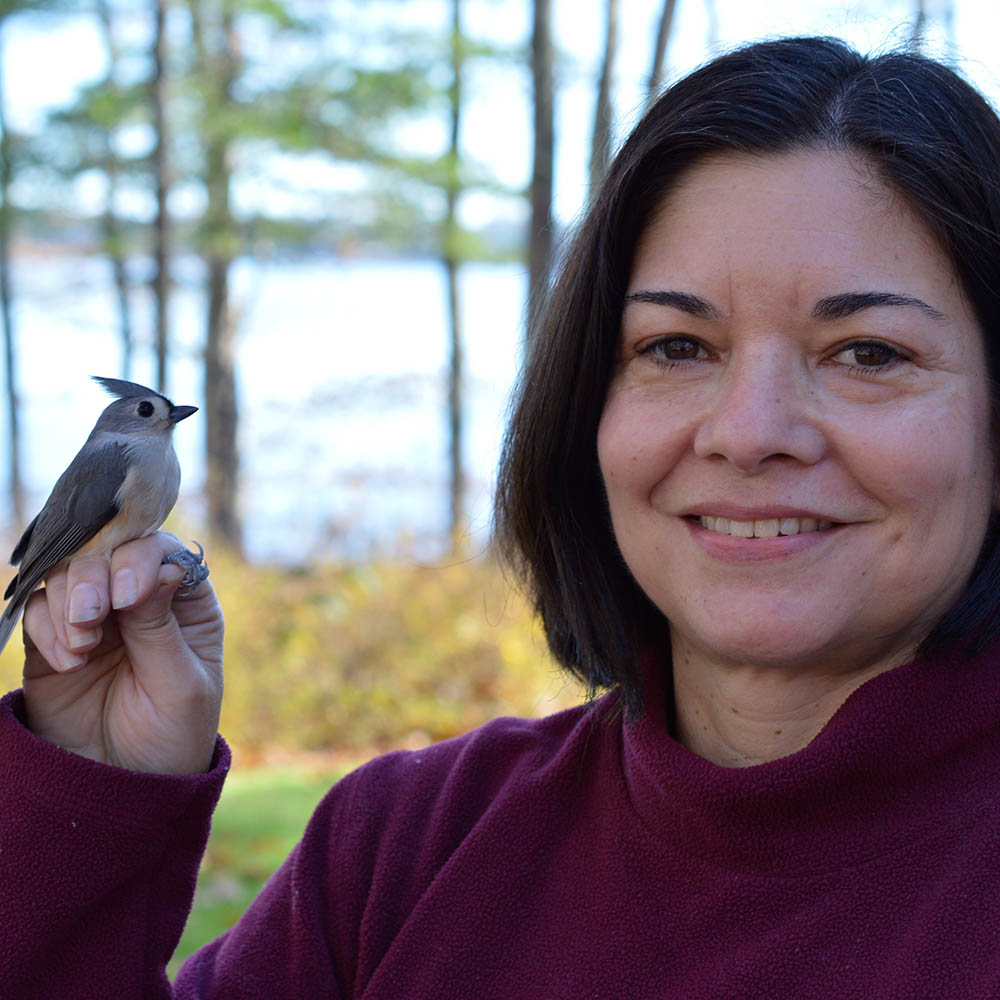

The effects of human interaction on Canada jay (Perisoreus canadensis) behavior and nest predation
Tuesday, September 24, 2025 12:00 PM – 1:00 PM Zoom™ & In person at 180 Jewett Hall
Humans have a long history of feeding birds, either to help them survive by supplementing their diets, or simply to enjoy interacting with them. Canada jays are charismatic birds that have become accustomed to these interactions to varying degrees. To survive the winter, they need to cache numerous food morsels throughout their territory. Their diverse diets include insects, berries, carrion, human offerings, and the eggs and nestlings of other birds. Concern has been expressed in recent years that Canada jays attracted to wilderness recreationists might increase predation pressure on nesting songbirds. To address this concern, we compared jay behavior and nest predation levels in New Hampshire and Maine between sites where little human interaction has been documented, and sites located at popular recreation areas where feeding has been well documented. During May and June 2022-2024, we captured and banded Canada jays to track individuals, recorded their behavioral responses to people in their territory, and used artificial nests with game cameras to document nest predation. Results show that in areas of high human interaction, jays approach closer to humans, usually landing on someone’s hand to take food, spend much more time near people, find decoy nests in less time and find more nests compared to low interaction areas. In areas with fewer human interactions, they rarely approach people, showing no interest in human food. These results suggest that feeding jays may have an impact on breeding songbirds, which could have important conservation implications. Drs Long and Postava-Davignon’s research is featured on Season 19, Episode 6 of the New Hampshire PBS show “Windows to the Wild” hosted by Willem Lange. Episode 6, entitled “Bird in the Hand”, will be broadcast on November 7th, 2024 at 8 PM. All episodes of Season 19 are currently available to Passport members.
Pivot for Funding and Professional Development
Monday, April 22 2024 12:00 PM – 1:00 PM Zoom™
Join Veronica Nargi, Learning Experience Design Librarian at UMA, in a webinar that showcases various features of Pivot RP for advancing professional development and research pursuits. Pivot RP is a UMS-provided tool that allows faculty and staff to navigate the world of funding opportunities, scholarships, and conferences. Throughout the session, we will sample the user-friendly features of Pivot RP, demonstrating its versatility in aiding individuals in academia. Together we will learn how to utilize this tool in order to streamline the process of identifying funding sources tailored to specific research goals. Whether seeking financial support for research endeavors or pursuing avenues for professional growth through scholarships and conferences, Pivot proves itself an indispensable ally. If you are struggling to find funding opportunities or would like to diversify your professional research portfolio, please consider joining us for this demonstration.

Veronica Nargi
UMA Learning Experience Design Librarian

Anne Fensie
UMA Lecturer II & UM Doctoral Student

Teri St. Pierre
UMPI Director of Early College & Associate Professor of Mathematics

Jennifer Jain
UM Interdisciplinary Doctoral Student & Graduate Research Assistant
Engaged learning during distraction: A case study of successful working moms in distance education
Thursday, February 29, 2024 12:00 PM – 1:00 PM Zoom™
Adult learners are a significant proportion of distance learners and many of these students are working mothers. Several instructional design models center the learner, and this requires understanding the learner needs, strengths, and context. There is a gap in the literature describing the experience of modern working mother students in distance education. To understand this experience, the researchers interviewed and observed six academically high-achieving working mother students as they participated in their distance education courses during the pandemic. A discourse analysis approach was utilized to analyze the data. This extreme sample revealed several strategies that these students used to be successful despite their challenges. The findings suggest that understanding the experiences of distance learners as they study in the home are important for effective course design. More specifically, working mothers face significant distractions in their study environments, but the cognitive load can be reduced by making use of their prior knowledge, scaffolding instruction, and encouraging social presence. Additional strategies from the literature that address these constructs are provided for instructors and instructional designers.
- “Not in My Backyard!” — Human Trafficking in Maine: Jessica Sidelinger, first-year Justice Studies student; Sharon Sawyer, Assistant Professor of Justice Studies
- The Experience of Homelessness in Hawai’i: Krissy Gleason, Visiting Professor of Community Psychology
- The Case for Graph-Partitioning Algorithms as an Additional Redistricting Constraint for State and/or Federal Legislative Districts: Matt Dube, Assistant Professor of Computer Information Systems
- Worming Around with Cognitive Enhancers (and Human Aging Implications): Amber Howard, Assistant Professor of Biology
- An Objective Mathematical Approach to the Identification of Potential Gerrymanders: Matt Dube, Assistant Professor of Computer Information Systems
- All Cannabis is Medicinal: Understanding the Body’s Endocannabinoid System and how ‘Marijuana’ Heals: Carey Clark, Associate Professor of Nursing
- Third Woman, Third Wheel: Gender and Translation in Natalie Clifford Barney’s Women Lovers, or The Third Woman: Chelsea Ray, Associate Professor of French and Comparative Literature
- Enhancing Pedagogy and Research with Pre-attentive Attributes: Matt Dube, Assistant Professor of Computer Information Systems
- Book Talk: Finally, A Song from Silence: Kati Corlew, Assistant Professor of Psychology
- Supreme Court Preview and Review: Jim Melcher, Professor of Political Science, University of Maine at Farmington
- Psychology of Climate Change: Kati Corlew, Assistant Professor of Psychology
- Strategies to Improve Student Participation in Online Discussions: Tim Surrette, Assistant Professor of Education
- Alligators in the Parlor: Visual Technologies, Circulation, and Disruption: Elizabeth Powers, Assistant Professor of English
- Cross-border Parental Abduction and The Problem of Domestic Violence: Sharon Sawyer, Assistant Professor of Justice Studies
- Faculty Panel: Research Across the Disciplines II: Timothy Surrette, Amber Howard, and Sharon McMahon-Sawyer
- Interdisciplinary Therapies: Kati Corlew, Jen Mascaro, Ellen Taylor, and Tamara Hunt
- Disaster, Climate Change, Food, Ecology and Dystopia: Kati Corlew, Sandra Haggard, Colleen Coffey, and Sarah Hentges
- History, Rhetoric, and Texts: Rob Kellerman, Tom McCord, and Elizabeth Powers
- Yoga: Theory, Practice, Application, and Expression: Carey Clark, Nicole Caruso, Kati Corlew, and Sarah Hentges
- Compute This: Math, Science, Complexity and Art: Lester French, Larry Whitsel, Rick Nelson, and Lynn Twitchell
- Wham, Bang, Pow! Graphic Novels and Intersectionality: Lisa Botshon, Peter Precourt, and Kati Corle
- Examination of Interdisciplinary Disciplines Sarah Hentges
- Social Science Panel on Interdisciplinarity: Kati Corlew, Ken Elliot, Lorien Lake-Corral and Charles Waugh
- Faculty Panel: Research Across the Disciplines I; Lisa Botshon, Professor of English; Rosie Curtis, Lecturer in Architecture; James Cook, Assistant Professor of Social Science; Peter Milligan, Professor of Biology; Carey Clark, Assistant Professor of Nursing, Moderator
- Humanities Panel on Interdisciplinarity: Sarah Hentges, Jeff Sychterz, Kay Retzlaff, Rob Kellerman, and Ellen Taylor
- High and Low: Steel Sheds, Steel Towers and the Rise of Modernism: Amy Hinkley, Assistant Professor of Architecture; Eric Stark, Associate Professor of Architecture
- Online Education in the Year 2030: A Look Forward: James Cook, Assistant Professor of Social Science
- Assessing Information Literacy: Looking Back and Moving Forward; Jodi Williams, Associate Professor of Information & Library Services; Ben Treat, Director of Library Services; Hirosuke Honda, Director of Assessment
- How Many People Are You? Shaping Your Day for Success: Steve Moro and Jon Potter, Adjunct Faculty in Communication
- Housing Discrimination in Maine: Audit Studies and the Importance of Social Research to Social Justice: Jill Hunter, Pine Tree Legal Assistance
- Tales for the Trustee Professorship and Sabbatical: Social Practice, Studio Practice, the Collaborative Process and the Gift of Time: Peter Precourt, Associate Professor of Art
- Let’s Talk Turkey: Peter Milligan, Associate Professor of Biology
- Teaching and Living Internationally: Chelsea Ray, Assistant Professor of French and Comparative Literature
- Open Maine: Making Politics Social: James Cook, Assistant Professor of Social Science
- Separating Words From Thought: Spoken and Written English, Varied Perspectives — A Roundtable Discussion: Michelle Lisi, Director of University College Virtual Academic Writing Lab and Tutoring (VAWLT) Project
- The Cultural Impacts of Climate Change: Dr. Kati Corlew, Assistant Professor of Social Science
- Why Americans are Not Bilingual: Yarissa Ortiz-Vidal, Adjunct Professor of Spanish
- To Stay Here and Die Here For My Country: Climate Change in Tuvalu: Dr. Kati Corlew,
- Adult Development and Higher Education: The Unstated Curriculum: Chip Curry, Student
- Women and Fitness in American Culture: Sarah Hentges, Assistant Professor of American Studies
- The Price of Complacency and the Strength of Will: John G. Shattuck, Adjunct Professor of Mental Health and Human Services
- Teaching and Living Internationally: Tom Giordano, Ellen Taylor, Lisa Botshon, Mary Lewis Davitt, and Chelsea Ray
- Sci-Fi Live: From William Gibson to Ray Kurzweil: Mojca Krevel, Professor of English, University of Ljubljana
- We Can Get There From Here: Designing Online Interaction: Mina Matthews and B.J. Kitchin, University College E-Learning Specialists
- Women and Fitness in American Culture: Assistant Professor of American Studies Sarah Hentges
- Why Americans are Not Bilingual: Yarissa Ortiz-Vidal, Adjunct Professor of Spanish
- The State of Academic Integrity at UMA: Laura Rodas, Coordinator of Community Standards and Mediation
- Poetry, the Iraq War, and the Legacy of Trauma: Jeff Sychterz, Assistant Professor of English
- Orientalism: West Meets the Middle East: David Farmer, Adjunct Professor of Art
- Six Great Ideas in Computer Science: Mark Goodridge, Adjunct Professor of Computer Science
- Women’s, Gender, and Sexuality Studies: What’s in a Name?: Sarah Hentges, Kay Retzlaff, and Jeff Sychterz
- She Blinded Me with Science! The Case for Information Literacy in Our Classrooms: Assistant Professor of Information and Library Services Vincent Livoti
- Roundtable Discussion: Putting Ideas into Action — Civic Engagement: Val Marsh, Coordinator of Civic Engagement
- Roundtable Discussion: Distance Education: The Challenges and Triumphs: B.J. Kitchin, eLearning Specialist II
- Showtime! Using Drama, Speech, and Debate in the Workplace: Adjunct Professors Steve Moro and Jon Potter
- French in Maine: A Community-Based Approach: Assistant Professor of French and Comparative Literature Chelsea Ray
- Presidential Mini-Grant Research: a Student Symposium: Assistant Professor of Mental Health and Human Services Terry Adams
- Alcohol, War, and Automobiles: Constructing Masculinity and Navigating Power in Mad Men: Assistant Professor of English Jeff Sychterz and Adjunct Instructor of Interpersonal
- The Psychoneuroimmunology of Mind-Body Healing: Assistant Professor of Nursing Carey Clark
- Optimism, Pessimism and Locus of Control: How Do They Affect Your Academics?: Professor of Psychology Charlie Grunder
- Mouths and Minds Wide Open: The State of Maine & Oral Cancer: Assistant Professor of Dental Health Danielle Furgeson and Clinical Teacher Nancy Foster
- Housing Discrimination and Fair Housing Tests in Maine: Elyse Apantaku, Pine Tree Legal Foundation
- Should Caffeine Be Limited to Adults Only?: Assistant Professor of Mental Health and Human Services Kim Lane
- Science Denial, a Threatening Social Phenomenon: Reality and Response: Adjunct Professor Philip Gerard
- A 15th-Century Life of St. Cuthbert: or, Why Read Medieval Saints’ Lives?: Associate Professor of English Robert Kellerman
- From Shebeens to the Governorship: How the Irish ‘Made It’ in Belfast, Maine: Associate Professor of English Kay Retzlaff
- Matters in Maine: Measuring Individual Health, Well-Being, and Life Satisfaction: Assistant Professor of Social Science Catherine Turcotte
- Nurses’ Experiences of the Practice of the Peerspirit Circle Model from a Gadamerian Philosophical Hermeneutic Perspective: Assistant Professor of Nursing Kristen Lombard
- Wild Blue Yonder: How Bangor, Maine, Decided to Reinvent a Neighborhood, an Air Base, and its Downtown: Lecturer in Liberal Studies Tom McCord
- Culturally-Appropriate Care: What The Youth are Saying: Adjunct Professor Kathleen Fox
- Carol Dweck’s Mindsets: A Workshop for Faculty and Students on Expanding our Potential: Associate Professor of Mathematics Christine LeGore
- American Fitness from Jane Fonda to Wii Fit: Critical and Creative Explorations of Women, Exercise, and Transformation: Assistant Professor of American Studies Sarah Hentges
- Publics and Places: An Architecture of Democracy: Associate Professor of Philosophy Greg Fahy